

Create an account in Netherlands, set limits and start playing with clear steps for verification and payouts.
Before creating an account, it pays to think two minutes ahead. Imagine you're sitting on the couch in the evening, you want to try 'just one round' and you find you have to go back three more times because a confirmation code doesn't arrive. Make it easy for yourself: use an email address you can open immediately, keep your number handy, and choose a strong password you don't use anywhere else.
Also, check if your name is spelled the same in your payment app and your identification documents - that will save questions during checks later. And in Netherlands, age and access requirements apply: only register if you are allowed to play as an adult according to local rules.
All promotional incentive structure is clearly stated in writing and/or via electronic means in an easily understood manner. All codes are accompanied by an explanation of what the code is for, who is eligible to use the code, and how it should be used. As such, players are less likely to be confused about what is required of them in order to receive a reward and how the reward will be applied after receiving it. The promotional incentives provided to participants provide them with time to become familiar with the gaming system's mechanics, their interface, and progress, before deciding how deeply they wish to become involved with this platform. Therefore, players are encouraged to participate in an informed manner, rather than being pressured or tempted to act quickly.
The registration involves a few clear steps: create a profile, confirm data, choose settings. If you do it neatly, it feels like online banking - short, logical, and done. Consider this scenario: you quickly fill in your data, but use a nickname, and later it turns out that payouts can only be made to an account in your official name. It's better to use your real details immediately and avoid typos, especially for address and date of birth.
After filling in, you usually receive an email or SMS to confirm you are the owner. If the code doesn't arrive, check spam or filters and only then request a new one. Also, pay attention to autofill: it's convenient, but it sometimes enters an old address or a wrong number. Take ten seconds to read everything one more time, especially if you are working on mobile.
Conclude with notifications for limits and breaks, so you don't have to stop based on feeling.
After logging in, you often immediately see your profile, your balance overview, and the tools to set limits. Many players skip the latter. Imagine: you win early in the evening and think you can continue "with profit," but you only realize after an hour that you've lost track of time. By first arranging the basic settings, you remain in control of your session.
Also take a minute for security: preferably use a unique login, check if there's a passkey option, and respond alertly to suspicious messages.
Start with the question: what is your budget for a week or month, and how much of that can go to entertainment? Consider a typical situation: you come home after work, you have little energy, and you are more inclined to make impulsive deposits. With a preset limit, you get a brief brake, precisely at the right moment.
Additionally, turn on a session timer and choose a fixed break moment. Some players also activate a loss limit or reality-check notification, so they don't just look at "one more spin." If a limit feels too strict, only adjust it later - not in the middle of the flow.
Identity verification is primarily a checklist to ensure an account belongs to one real person. Suppose you want to withdraw later and discover that your account name is slightly different from your bank account. Then a platform may ask extra questions, which delays the process. Prevent this by being consistent with your name and address.
If you need to upload documents, take sharp photos with good lighting, without cropped edges. For a selfie check, use a calm background and look directly into the camera; filters and poor lighting often lead to rejections. Sometimes proof of address is also requested (for example, a recent document with your name and address) - make sure it is readable and that you don't "clean up" anything in the image.
Secure Your Account With Extra Steps
Security is not just “a strong password.” Think of a moment when you are on public Wi-Fi and still want to log in – that's precisely when extra verification saves you. Turn on two-factor authentication if available, and preferably choose an authenticator or passkey instead of just SMS.
Also keep your devices up-to-date, use a screen lock, and do not share browser sessions with others.
Keep Your Data Organized For Payouts
A payout is often the point where sloppy details become visible. Suppose you move but leave your profile unchanged; then extra confirmation may be needed. Therefore, update changes immediately and preferably before requesting a withdrawal.
Initially use one consistent payment method, so you have fewer variables if something goes wrong. Also, do not change your email or phone number unnecessarily often; every change can activate an extra security step.
Once your account is set up, you'll want to add funds and later withdraw them. It helps to see these as two separate workflows, with their own checks. Suppose you deposit quickly and start playing, but you forget that some methods first need to be linked to your identity. By calmly following the steps, you prevent surprises.
Make it practical: use an entertainment budget separate from fixed expenses. This way, a deposit feels like a conscious choice, not something that "just" comes out of your daily pot.
Choose a payment method you use daily and that is in your own name. Consider the situation where you briefly use a partner's card "because it's faster" - afterwards it turns out that withdrawals can only go back to the original source, and you get extra checks.
Preferably deposit a small amount to test if everything is correct and only then increase, within your limit. Pay attention to confirmation screens and do not save your payment details if you are using a shared device.
|
Step Into The Payment Flow |
What You Do |
What To Pay Attention To |
Why It's Useful |
|
First Deposit |
Add a small amount |
Payer's name is correct |
Less risk of later questions |
|
Repeat Deposit |
Deposit within budget |
Limits and notifications active |
You maintain control over pace |
|
Withdrawal Request |
Choose amount and confirm |
Payment source in your own name |
Less chance of chargeback hassle |
|
Control Phase |
Review data |
Documents sharp and complete |
Faster processing |
When withdrawing, consistency is key. Imagine: you've just changed your phone and email, and precisely then you want to withdraw money; that can trigger additional security questions. Therefore, plan: changes first, withdrawal later.
Request your withdrawal in one go, check the amount, and only submit what is requested if a review is underway. Processing and limits may vary by method, so check your account to see if there's an open step before reapplying.
Checks are often routine. Consider the scenario where you enter an incorrect code multiple times; the system temporarily blocks you to prevent misuse. Wait a moment and tackle one step at a time.
If something gets stuck, note the time and error message. That's precisely the information that helps support assist you faster. And if you become agitated, close the session for a moment: a short break prevents you from making more incorrect attempts out of frustration.

In Netherlands, gaming involves clear boundaries and mature choices. Many people start enthusiastically and later notice sessions getting longer. Suppose you want to relax after a busy week and you find yourself returning more and more often 'because it's fun.' Tools that you set in advance then help: you don't have to negotiate with yourself.
See these tools as a cockpit: limits, breaks, and reality checks keep your gaming behavior visible, even when you're tired or distracted.
A deposit limit only works if it's realistic. Choose a ceiling that fits your monthly budget and that you don't have to raise repeatedly. If you notice you're constantly hitting the limit, see that as a signal to pause.
Turn on notifications when approaching the limit, so you get a warning in advance. Many players find it pleasant to take a 'cool-down period' before an increase takes effect, so decisions aren't made in the moment.
A timer breaks through the 'tunnel' where you only look at the next result. Imagine: you say you'll play for ten minutes, and suddenly it's an hour later. With a timer, you get a check-in, precisely when your attention drifts away.
Make the break concrete: take a walk, drink water, or close the app. When you come back, ask yourself one thing: am I still playing for pleasure, or to 'fix' something?
Time-out is a button for rest. For example: you notice you're getting irritated by small losses and you want to 'win back'. That's when a temporary break is most valuable.
Choose a period you take seriously and return with a fresh perspective on your limits. During that time, also turn off marketing notifications so you aren't unnecessarily tempted.
Sometimes a longer break is needed, especially if playing no longer feels like entertainment. Suppose you notice you're hiding it or that it causes tension in your environment - that's a red flag. Self-exclusion then helps remove the barrier: you simply cannot log in.
Combine this with support from someone you trust, and seek professional help if you find you've lost control. Many people wait because they feel ashamed, but talking sooner actually makes it lighter.
Even with a strict process, something can go wrong: a typo, a double confirmation, an outdated app. Suppose you get an error message when logging in just as you want to start - frustrating, but usually quickly resolved. Start with basics like updating, restarting, and checking if a VPN or blocker is preventing verification.
If the problem persists, contact support specifically: describe what you did just before the error, include one screenshot, and mention whether you are using mobile or desktop. That saves back-and-forth questions.
Write exactly what you see (“invalid code”, “request failed”), which button you pressed, and whether you are using mobile or desktop. Consider situations where you log in on two devices simultaneously; some systems see this as a risk and activate an extra check. In that case, first log out everywhere and try again on one device.
Activate recovery options such as backup codes or an authenticator, so you are not dependent on a single SMS. When recovering, always choose the official reset flow in your account environment instead of improvising. And if you need to have your data adjusted, be patient: security often takes precedence over speed.
Use one fixed email address and one phone number, and do not create a second profile “for convenience.” If you are unsure whether you already have an account, first choose password recovery. This prevents you from having to explain later why multiple profiles exist and keeps your payment details organized.
Keep a valid identity document ready and ensure your profile data matches it. This often involves name, date of birth, and address, plus clear photos of the document and sometimes a selfie check. Take the images in good light, without reflection, and do not crop anything.
Check spam, filters, and coverage, and do not request multiple codes too quickly. Often, only the latest code is valid, rendering older ones useless. Wait a short while, try again, and switch channels if that option is available.
Choose your budget and translate that into a deposit ceiling and a session timer. Turn on notifications before you reach the limit. Agree with yourself that you only change limits when you are not playing; that moment of distance makes choices much easier.
Preferably use one method in your own name, especially in the initial phase. Do not change data at the same time you want to withdraw; plan that separately. Keep transaction confirmations and never share codes or logins, even if it sounds urgent.
If playing causes stress, makes you chase losses, or keeps you longer than planned, a time-out is a quick step. Self-exclusion is more appropriate if you repeatedly exceed limits or if playing affects your daily life. Combine it with support from someone you trust; you don't have to solve this alone.
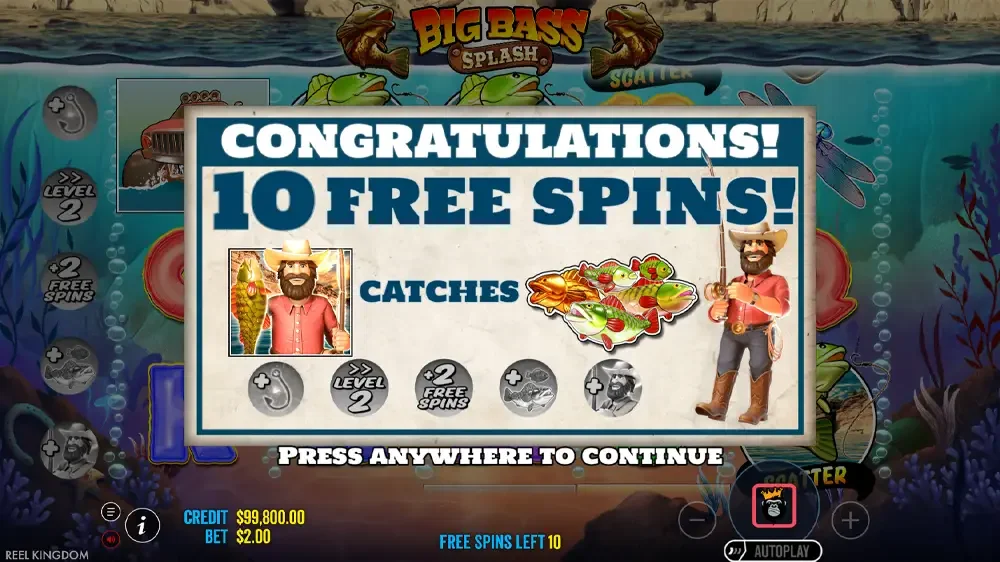
Big Bass Splash is a fascinating game that combines the best of online slots with an exotic and exciting theme.